


His SEO, PPC, and AI-driven automation work has helped clients increase lead generation by as much as 187%. B&FPS has been named among the Best SEO Agencies, Best PPC Agencies, and Best Web Design Agencies in Miami by Expertise.com every year from 2023 through 2025, and holds a 5-star Google rating as a certified Google Partner.
Daniel holds a Master's in Interactive Technology from the University of Alabama and a Bachelor's in Public Administration from Barry University. He's completed specialized training in digital marketing through the University of Illinois at Urbana-Champaign and web development, coding, and business through the University of Michigan. He's a member of the Honor Society of Phi Kappa Phi and the Golden Key International Honour Society.
If you’re a small business owner in South Florida spending money on digital marketing for small businesses and wondering why nothing seems to be working, you’re not alone. I’ve audited dozens of small business marketing accounts in Miami, and the same problems show up every single time. The budgets are different. The industries are different. But the mistakes? Almost identical.
What I keep seeing is this: business owners are paying for visibility without any system in place to convert it. They’re running ads, posting on social media, maybe even ranking on Google, but the phone isn’t ringing the way it should. The clicks aren’t turning into customers. And the agency they hired three months ago keeps sending reports full of impressions and reach numbers that don’t pay the bills.
In many cases, the issue is not just execution. It is a lack of a structured approach to search visibility, local presence, and conversion. If you want to see how those pieces are supposed to work together, this breakdown of SEO services in Miami explains the full system.
This article is for you if you’re in that situation. I’m going to walk you through the most common ways small businesses are bleeding marketing budget right now, why those mistakes are so easy to make, and what a smarter approach to digital marketing for small businesses actually looks like.
TL;DR
- Most small business marketing fails because it focuses on traffic and visibility without a system to convert that attention into paying customers.
- The three most common money-wasters are running ads without a real funnel, paying for SEO with no local strategy, and outsourcing to agencies without clear expectations or accountability.
- Visibility is not a strategy. You need a clear path from someone seeing your business online to actually contacting or buying from you.
- A working digital marketing system for small businesses is not expensive. It’s focused, specific, and built around how your customers actually make decisions.
- Before you spend another dollar, audit what you already have. Most businesses already own assets they’re not using well.
The Core Problem With Digital Marketing for Small Businesses: Visibility Without Conversion
Let me be direct about something. A lot of what gets sold as “digital marketing” to small business owners is really just attention-buying. Someone sells you on getting more eyes on your business, and technically they deliver. Your ad gets shown. Your post gets likes. Your website gets traffic.
But none of that matters if there’s no system on the other side turning that attention into revenue.
I’ve seen restaurants in Miami running Facebook ads consistently for six months with no offer, no clear call to action, and a landing page that just redirects to their general homepage. The ad spend was real. The results were not.
This is the gap nobody talks about when they pitch you on digital marketing for small businesses. Getting found is only half the equation. The other half is what happens after someone finds you.
The Mistakes I Keep Seeing in Small Business Marketing Accounts
Running Paid Ads Without a Real Funnel
Paid advertising, whether it’s Google Ads, Meta ads, or anything else, can work extremely well for small businesses. But it only works when there’s a clear path from the ad to the conversion. Google’s own guidance on what makes a good landing page experience spells this out clearly, and most accounts I audit aren’t even close.

That path has to answer a few questions. Who is this ad talking to? What problem are they trying to solve right now? Where do they land after they click? What happens there? What do we want them to do?
Most of the accounts I audit don’t have real answers to those questions. The ad is running, maybe even to the right audience, but it’s pointing to a homepage that tries to explain everything the business does without asking the visitor to do anything specific.
When you run paid traffic to a page that isn’t designed to convert, you’re not doing digital marketing for small businesses the right way. You’re paying for exposure. And exposure, by itself, has very low return on investment for most local businesses.
Paying for SEO Without a Local Strategy
General SEO advice doesn’t translate directly to local business. If you own a plumbing company in Hialeah, ranking for “plumbing tips” is not going to grow your business. Ranking for “emergency plumber Hialeah” might.
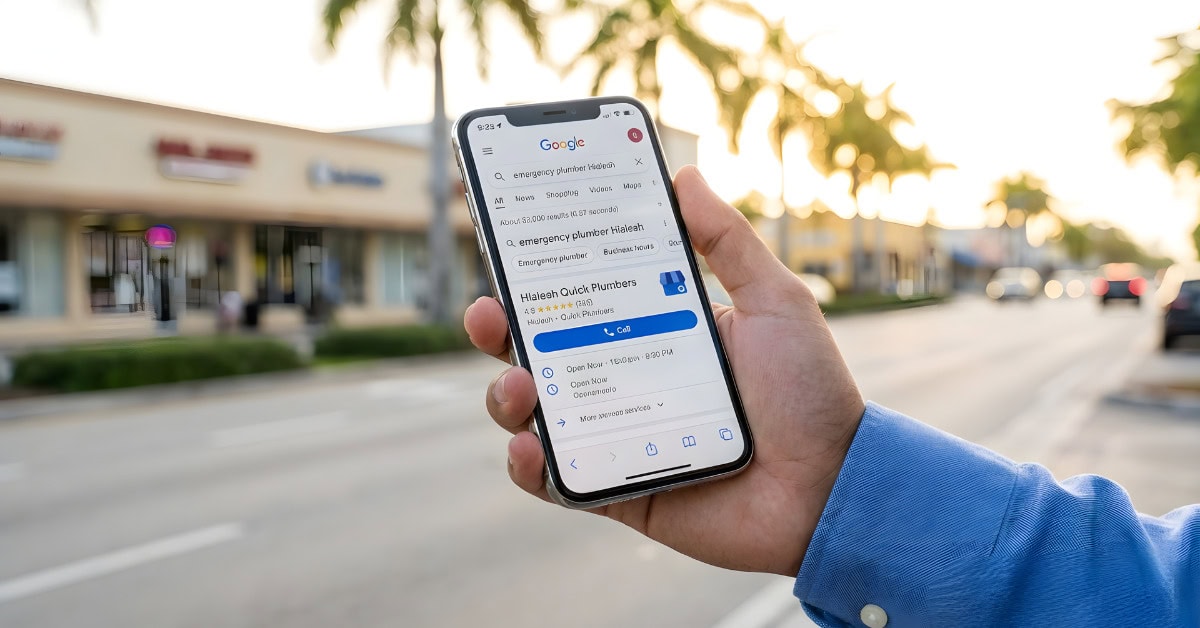
Local SEO for small businesses has a specific set of priorities: your Google Business Profile, your reviews, your local citations, and landing pages that target the specific neighborhoods and services you want to be known for. Google’s guide to improving your local ranking is worth reading if you haven’t already. When I see a small business paying $1,500 a month for SEO and none of that work has touched their Google Business Profile or local keyword targeting, something is wrong.
I’m not saying broad SEO has no value. But for a small business with a limited budget, local search visibility should come first. That’s where your actual customers are looking. But showing up there consistently requires more than generic SEO work. It takes coordination between your website, your Google Business Profile, and your local authority signals. That’s what goes into SEO services Miami businesses rely on when they want to compete in local search.
Outsourcing Without Accountability or Clarity
This one is probably the most frustrating pattern I see. A business owner hires an agency or a freelancer, pays a monthly retainer, and after a few months has no clear sense of what was done, what it was supposed to accomplish, or why it isn’t working.
Good agencies exist. But a lot of what gets sold to small businesses in Miami and across South Florida is packaged services that look comprehensive on paper but aren’t built around your specific business goals. You get a social media calendar, a blog post once a month, and a monthly report with numbers that don’t connect to anything meaningful.
If you can’t answer these three questions about whoever is doing your digital marketing for small businesses, you have a problem:
- What specific outcome are they responsible for producing?
- How are we measuring whether that outcome is happening?
- What changes if it’s not happening after 60 or 90 days?
If there’s no clear answer, you’re not buying marketing. You’re buying activity.
Treating Social Media as a Strategy
Social media can be part of a strategy. But for most small local businesses, it is not a strategy by itself.
Posting consistently on Instagram might keep you top of mind with people who already know you. That has some value. But if your primary goal is new customer acquisition, organic social media is usually a slow and unpredictable path to get there, especially with how crowded most feeds have become. Meta’s own breakdown of how the feed algorithm works makes clear just how hard organic reach is for business pages today.
I see small business owners spending hours a week creating content or paying someone to manage their accounts when that same time and money would produce better results if pointed at local SEO, a Google Business Profile that’s actually optimized, or a simple referral system for existing customers.
Know what job you’re asking social media to do, and be honest about whether it’s actually doing that job.
What a Smarter Approach to Digital Marketing for Small Businesses Actually Looks Like
Start With the Conversion, Not the Traffic
Before you put any money into getting more eyes on your business, make sure you have a clear answer to this question: when someone finds you online, what do you want them to do, and how easy is it for them to do it?
That might mean fixing your website. It might mean setting up a landing page with one focused call to action. It might mean making sure your phone number is visible, your hours are accurate, and your reviews are recent. These aren’t glamorous, but they’re the foundation that makes everything else work for your digital marketing for small businesses efforts.
Build Your Local Presence First
For most small businesses in South Florida, the highest-return digital marketing activity is a well-optimized Google Business Profile paired with a consistent effort to generate real customer reviews. Google’s Business Profile help center walks you through every field worth filling out.
This doesn’t cost much. It requires consistency and a system for actually asking happy customers to leave a review. But it’s the fastest way I know for a local business to show up when someone nearby is searching for what they offer.
Know What You’re Measuring Before You Start
Every dollar you spend on marketing should be connected to something measurable. Not impressions. Not follower counts. Phone calls, form submissions, booked appointments, or whatever the right action is for your business.
If your current digital marketing for small businesses doesn’t have a clear measurement framework, that’s the first thing to fix. It’s almost impossible to make good decisions about where to spend money when you don’t know what’s working.
Get a Baseline Audit Before You Spend More
If you’re already spending money on digital marketing for small businesses and you’re not sure it’s working, stop before you add to the budget. Go back and look at what you already have.

Most businesses I work with already own assets that aren’t being used effectively: a website that gets real traffic but has a conversion problem, a Google Business Profile that hasn’t been updated in a year, a customer list that’s never been contacted for a referral ask.
Fix what you have before you buy more.
FAQ
Why isn’t my Google Ads campaign bringing in customers?
The most common reason is a mismatch between the ad and what happens after the click. If your ad makes a specific promise but your landing page is a general homepage, visitors leave. You need the message in the ad to match what the person sees when they land. You also need a clear, specific next step for them to take. If those pieces aren’t in place, the platform is working but the system around it isn’t.
How much should a small business spend on digital marketing?
There’s no universal answer, but I’d push back on the idea that you need a big budget to see results. A focused local SEO effort and a well-maintained Google Business Profile can move the needle with very little ad spend. If you are going to run paid ads, start small, test one specific offer to one specific audience, and scale only what’s actually working. Spending more on something that isn’t converting just loses money faster.
Is social media worth it for small businesses?
It depends on what you’re using it for. Social media can be great for building trust with people who already know you and for staying visible in your community. It’s not usually the most efficient way to find new customers from scratch unless you’re running paid campaigns with a real strategy behind them. Think of organic social media as a trust-builder, not a primary acquisition channel.
How do I know if my marketing agency is actually doing a good job?
Look at whether their reporting connects to real business outcomes. Impressions, reach, and engagement are secondary metrics. The primary ones are leads, calls, booked appointments, and sales. If your agency can’t tell you clearly how their work is affecting those numbers, that’s a problem. You should also be able to understand what they’re doing and why, even if you’re not a marketing expert. Confusion is not a sign of complexity. It’s usually a sign of unclear strategy.
What’s the first thing I should fix if my digital marketing isn’t working?
Start with your Google Business Profile. Make sure it’s fully filled out, that your information is accurate, and that you have a system for collecting reviews regularly. This is one of the highest-impact, lowest-cost things a local business can do when it comes to digital marketing for small businesses. After that, look at your website and ask honestly: if someone landed here not knowing anything about my business, would they understand what I do, who I serve, and what to do next?
Do I need a big website to do digital marketing well?
No. In fact, a simple, focused website often outperforms a large, complicated one. What matters is that the pages you have are doing a clear job. A one-page website with a compelling offer, social proof, and a clear call to action will outperform a 15-page site that’s trying to say everything at once. Start simple and add pages when there’s a real reason to.
Conclusion
Here’s the thing I want you to take away from this. Digital marketing for small businesses is not magic, and it’s not complicated. But it does require a clear system, honest measurement, and a realistic understanding of what each tactic actually does.
If you’re spending money on marketing right now and you can’t clearly explain what it’s producing, that’s not a marketing budget problem. It’s a strategy problem. And the fix doesn’t start with spending more. It starts with stopping, looking at what you already have, and making sure the basics are actually in place before you add more fuel.
I’ve watched too many good business owners in Miami get sold on tactics instead of systems. Spend money on visibility with nothing to show for it because nobody helped them build the conversion side of the equation. That’s the real gap. And it’s fixable once you know what to look for.
If you want a second set of eyes on what you’re currently doing, that’s exactly the kind of conversation I have with business owners all the time.
If you’re working with a digital marketing agency for your small business and not seeing results, get a free marketing audit and we’ll build you a custom strategy deck to go over together on a call.